
In a time when the earth feels as fragile as our attention, an old truth is quietly returning to the surface: the well-being of our planet and the well-being of our skin are deeply, inseparably connected. Beneath our feet exists a living world — a complex web of microorganisms, minerals, and natural cycles — working constantly to nourish the plants that ultimately nourish our bodies and our skin. Yet modern agriculture, driven by speed and extraction, has strained this relationship. Today, as our desire for radiant skin begins to align with our longing for a healthier planet, regeneration offers a path forward — one rooted in care, balance, and renewal.
A Living Earth, A Living Skin
Imagine soil that is dark, rich, and alive. Earthworms move slowly through it, fungi form vast underground networks, and bacteria quietly transform organic matter into nourishment. This soil — often unseen and undervalued — is the beginning of everything we consume, including the ingredients we place on our skin. Healthy soil is not static; it breathes, it holds water, it stores carbon, and it gives rise to plants filled with vitality.
Those plants carry compounds — antioxidants, vitamins, essential fatty acids — that our skin recognizes and responds to. A clay mask, for example, draws its mineral richness directly from the land it comes from. When soil is cared for, clay is potent and alive. When soil is depleted, it loses its strength. The same is true for botanicals like calendula or chamomile. Grown in diverse, nutrient-rich environments, they offer profound soothing and healing. Grown in exhausted soils, their power fades.
Our skin mirrors the Earth in remarkable ways. It, too, is an ecosystem — home to a delicate microbiome that protects, restores, and balances. Just as living soil supports strong plants, a healthy skin microbiome supports resilient, glowing skin. When the land is stripped of life, the ingredients it produces can no longer fully nourish our skin. What follows is a shared cycle of depletion — one that affects both the planet and our bodies.
The Cost of Extraction
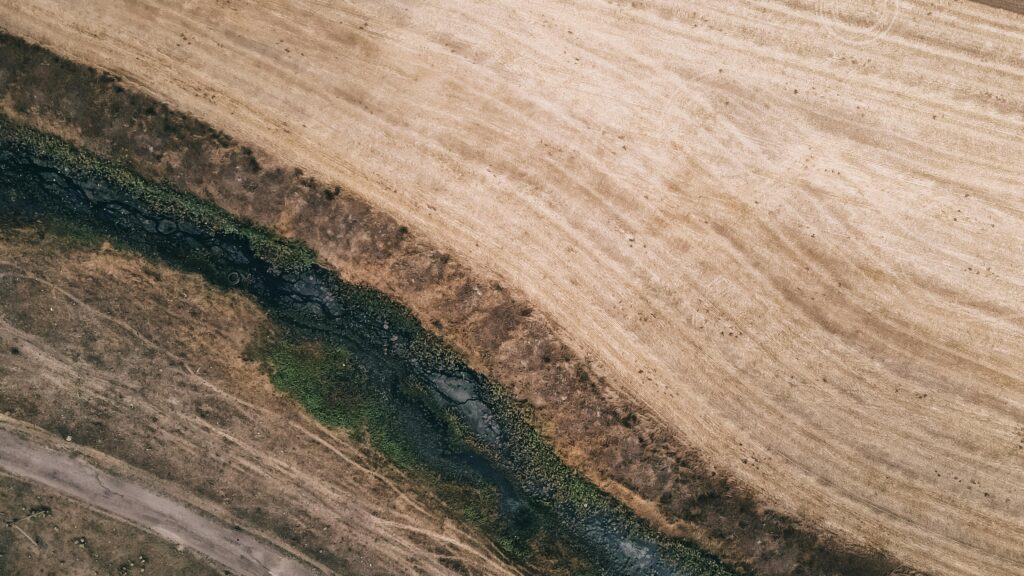
For decades, industrial systems have prioritized volume over vitality. Monocultures, chemical inputs, and aggressive tilling have stripped life from the soil, leaving vast landscapes weakened and vulnerable. This loss doesn’t stop at food production — it reaches into skincare as well. Ingredients grown in depleted soils carry less nourishment, fewer bioactive compounds, and diminished therapeutic value.
Many beauty products rely on oils, butters, and extracts sourced from these systems. While they may look the same on the surface, something essential has been lost. The environmental cost — polluted water, eroded land, rising emissions — mirrors the cost to our skin. When we harm the earth, we ultimately harm ourselves.
Regeneration: A Path to Healing
Regenerative agriculture offers a different way — one that restores rather than extracts. By working with nature instead of against it, regenerative farmers rebuild soil through cover crops, composting, crop diversity, and minimal disturbance. These practices invite life back into the ground, increasing biodiversity, capturing carbon, and enhancing the nutrient density of plants.
For skincare, this changes everything. Ingredients grown in living soil are richer, more vibrant, and more aligned with the skin’s natural rhythms. Shea butter sourced from regenerative agroforestry systems, where trees grow alongside food crops, contains higher levels of vitamins that deeply nourish and protect the skin. Oats grown in biodiverse soils carry more beta-glucans, offering greater soothing and hydration. These are ingredients that feel alive — because they are.
Healthy soils are also resilient. They hold water during drought, resist erosion, and protect future harvests. Supporting regenerative systems means caring not only for the present, but for generations to come — on the land and on our skin.
A Pressed Serum Born from the Earth
A pressed serum made from regenerative oils, butters, and supercritical CO₂ extracts is more than a product. It is a living expression of the land it comes from. Each drop carries the vitality of soil restored, plants grown with care, and extracts harvested with precision. Supercritical CO₂ extraction preserves the integrity of delicate compounds, ensuring that antioxidants, vitamins, and essential fatty acids remain potent and bioavailable for the skin.
Oils and butters from regenerative farms — shea, marula, sacha inchi — bring nourishment directly from living soil. Supercritical extracts of calendula, chamomile, and other botanicals carry the depth of biodiversity, delivering soothing, protective, and restorative benefits. When you apply this serum, you are not just moisturizing; you are connecting to a system restored, alive, and balanced.
A Cultural Remembering
This understanding is not new. Indigenous cultures have long known that caring for the land is a form of self-care. Shea butter harvested from biodiverse groves, turmeric grown in harmony with the soil, botanicals gathered with respect — these traditions remind us that beauty has always been rooted in the earth.
Today, that wisdom is being rediscovered. Farmers, makers, and consumers are choosing regeneration. Fields once depleted are being restored. Small farms, urban gardens, and conscious brands are rebuilding soil and reimagining beauty as something relational, not extractive.
The Call to Care
Every choice matters. Supporting regenerative farms. Choosing brands committed to soil health. Returning organic matter to the earth. These small acts ripple outward — healing the land, enriching our skincare, and reconnecting us to the cycles that sustain life.
When you apply a pressed serum made from regenerative ingredients, you’re touching more than your skin. You’re touching a living system brought back to balance. In caring for your skin, you are caring for the earth. And in regenerating the earth, you are — gently, quietly — regenerating yourself.